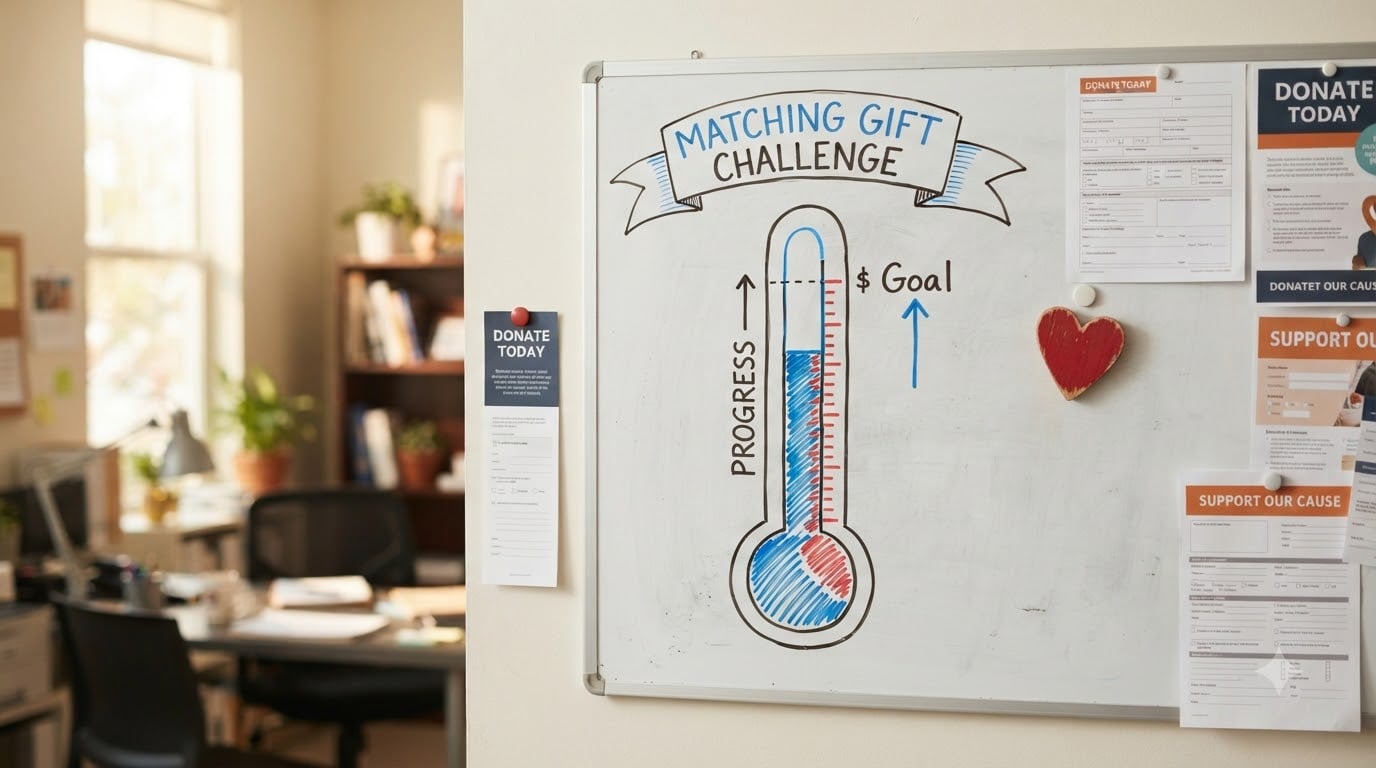
You have probably seen the appeals. A nonprofit announces that a generous donor will match every gift dollar-for-dollar, but only if the community hits a specific target by a deadline. The urgency is real. The clock is ticking. But what happens if the campaign falls short of that magic number? Does the charity still get the money? Do individual gifts get doubled? Or does the whole promise evaporate?
The answer depends almost entirely on what type of matching arrangement the organization set up in the first place. There are three common structures: purpose-restricted donations, conditional grants, and pure marketing campaigns. Each one handles a shortfall differently. Some release unmatched funds to the nonprofit anyway. Others reduce the match proportionally or pay nothing at all.
In this guide, we break down exactly what happens if a matching gift goal is not reached. We cover the mechanics behind each arrangement type, what rights donors have, and how to tell whether a campaign is genuine before you give. Whether you are a donor weighing a year-end gift or a fundraiser planning a matching challenge, you will know precisely what to expect when a goal goes unmet.
Table of Contents
- 1What Happens If a Matching Gift Goal Is Not Reached?
- 2Understanding Matching Gift Programs
- 3Types of Matching Gift Arrangements
- 4Purpose-Restricted Donations
- 5Conditional Grants
- 6Pure Marketing Campaigns
- 7How Each Type Handles a Shortfall
- 8How to Verify a Matching Gift Campaign Is Legitimate
- 9What Donors Can Do If a Matching Goal Falls Short
- 10How Nonprofits Can Be Transparent About Shortfalls
- 11What happens if you don’t reach your goal on GoFundMe?
- 12How does a matching gift work?
- 13Is matching donors legit?
- 14Do unmatched funds get refunded?
- 15What is the 80/20 rule in fundraising?
- 16Conclusion
What Happens If a Matching Gift Goal Is Not Reached?
When a matching gift goal is not reached, the outcome depends on how the match was structured. In a purpose-restricted arrangement, the donor’s gift is tied to a specific use, and the nonprofit may need to return unmatched funds or ask the donor to release the restrictions. In a conditional grant, the matching donor may pay out a reduced amount based on what was raised, or pay nothing if the minimum threshold was not met. In a pure marketing campaign, there may be no separate matching funds at all, and the campaign simply ends when the deadline passes.
Our team reviewed the three most common matching arrangements nonprofits use today. Each one has different legal implications for what happens to the money when the community does not reach the stated goal.
Donors are right to ask questions. According to forum discussions on Reddit’s nonprofit and personal finance communities, many contributors feel misled when a campaign promises a “double your gift” match and then falls short without explanation. Transparency about the shortfall policy is the single biggest factor in maintaining donor trust after a missed goal.
The most important thing to understand is that not all matching campaigns work the same way. Let’s look at each type in detail so you know exactly what happens when the target is not reached.
Understanding Matching Gift Programs
A matching gift program is a fundraising arrangement where a company, foundation, or individual pledges to match donations made by others. The most common form is the corporate matching gift, where an employer matches contributions made by its employees to eligible nonprofits. A typical match ratio is 1:1, meaning a $100 donation becomes $200. Some programs offer 2:1 or even 3:1 ratios for specific campaigns.
Corporate matching gifts are the most widely recognized form. Companies like Microsoft, Google, and Pfizer run formal employee giving programs where workers submit a matching gift request after donating. The company verifies eligibility, confirms the nonprofit qualifies, and issues a matching payment directly to the organization. These programs usually have a maximum match limit per employee per year.
The matching gift process generally follows a predictable sequence. First, the donor makes their contribution to the nonprofit. Then they submit a matching gift request to their employer, either through an online portal or a paper form. The company reviews the request, confirms the donation meets eligibility criteria, and sends the matching funds to the charity. This can take anywhere from a few weeks to several months.
Not all matching campaigns involve corporations, though. Many nonprofits run time-limited matching challenges during fundraising events, year-end pushes, or capital campaigns. These often feature a major donor or board member who pledges to match community gifts up to a set amount. That is where the question of shortfalls becomes critical.
Types of Matching Gift Arrangements
Not every matching campaign operates under the same rules. Understanding the three main types of matching arrangements is the key to knowing what happens when a goal falls short.
Purpose-Restricted Donations
A purpose-restricted donation is a gift given with specific conditions on how it can be used. In a matching context, the matching donor says, “I will give $50,000 to match community gifts, but only for the new building fund.” The restriction is tied to a purpose, not to a fundraising target.
If the campaign does not reach its goal, the nonprofit still has the purpose-restricted funds. But those funds can only be used for the stated purpose. If the project the funds were restricted to is scaled back or cancelled because the goal was not met, the nonprofit may need to go back to the donor and ask them to release the restriction. In some cases, the organization may be required to return the funds.
This is the arrangement where shortfalls create the most administrative headaches. The nonprofit cannot simply redirect purpose-restricted money to general operations without the donor’s written consent.
Conditional Grants
A conditional grant is a pledge that only pays out if specific conditions are met. Think of it as a challenge: “If the community raises $100,000 by December 31, I will match it with another $100,000. If you do not hit $100,000, I give nothing.”
Some conditional grants have a partial structure. The donor might say they will match up to $100,000, meaning whatever the community raises, the donor matches dollar-for-dollar until the cap is reached. In this case, even if the goal is not met, the nonprofit still receives a match on whatever was raised. The difference is in whether the condition is an all-or-nothing threshold or a sliding scale.
Conditional grants are common in capital campaigns and major fundraising events. They create urgency and motivate donors to give. But if the condition is an all-or-nothing threshold and the community falls short, the matching funds never materialize.
Pure Marketing Campaigns
A pure marketing campaign is what it sounds like. The nonprofit announces a matching challenge to drive donations, but there is no separate pool of matching funds. The organization has already received a large unrestricted gift, and they are using that gift as a marketing hook to encourage more donations.
CharityWatch has written extensively about this practice. The nonprofit is not lying, exactly. The money exists. But framing it as a “match” implies that donations trigger additional funds, when in reality the money is already in the bank regardless of whether anyone gives.
If the goal is not reached in a pure marketing campaign, nothing changes. The organization keeps its existing gift. Donors who gave thinking their gift was being matched were not told the full story. This is the arrangement that draws the most criticism from watchdog groups and savvy donors.
How Each Type Handles a Shortfall
The practical outcomes when a goal is not reached vary significantly across the three arrangement types. Here is what actually happens to the money in each scenario.
With a purpose-restricted donation, the funds remain restricted to their stated purpose regardless of whether the goal was met. If the nonprofit cannot fulfill that purpose because the campaign fell short, the organization faces a choice. They can ask the donor to release the restriction and allow the funds to be used differently. Or they may need to return the money. Donors who contributed to the campaign itself usually keep their gifts with the nonprofit, unless their individual gifts were also purpose-restricted.
With a conditional grant structured as an all-or-nothing threshold, the matching donor pays nothing if the goal is missed. The community donations stay with the nonprofit, but the promised match does not arrive. This can be a significant blow to organizations that budgeted expecting the full match amount. With a conditional grant structured as a sliding scale or cap-based match, the donor pays whatever was earned based on the matching ratio, up to the maximum. The shortfall simply means a smaller match payment.
With a pure marketing campaign, there is no separate matching pool. The organization already has the funds it announced. Whether the goal is met or not, the nonprofit’s financial position does not change. The only thing affected is donor perception. Donors who gave because they believed their gift would be doubled may feel misled if they later learn the match was not real.
How to Verify a Matching Gift Campaign Is Legitimate
Donors are increasingly skeptical about matching campaigns, and for good reason. Forum users on Reddit frequently ask whether matching donors are legit and how to tell the difference between a genuine match and a marketing ploy. Here are the steps our team recommends to verify any matching campaign before you give.
First, look for clearly stated match terms. A legitimate campaign will specify the maximum match amount, the match ratio, the deadline, and what happens if the goal is not reached. If the campaign is vague about any of these details, that is a warning sign.
Second, check whether the matching donor is identifiable. Real matching challenges often name the donor or at least describe them, such as “a group of board members” or “a local family foundation.” Anonymous matches are not automatically suspicious, but named donors with verifiable giving histories add credibility.
Third, look for corporate matching gift programs with formal structures. Companies with established employee giving programs, online matching portals, and published eligibility criteria are more trustworthy than informal “a friend will match your gift” appeals. These formal programs are regulated and have clear submission processes.
Fourth, ask the nonprofit directly. A transparent organization will happily explain how the match works, who the matching donor is, and what happens if the goal is not met. If you cannot get a straight answer, consider giving to a different campaign or waiting for clearer information.
Finally, check charity watchdog sites like CharityWatch, Charity Navigator, or GuideStar. These organizations evaluate nonprofits on transparency, financial health, and accountability. A nonprofit with high ratings is more likely to run honest matching campaigns.
What Donors Can Do If a Matching Goal Falls Short
If you donated to a matching campaign that did not reach its goal, you still have options. The most important step is to understand what type of arrangement was in place.
Request written confirmation from the nonprofit about how the shortfall was handled. Ask whether the matching funds were paid out in full, partially, or not at all. A transparent organization will provide this information without hesitation.
If your individual donation was purpose-restricted, ask about the refund policy. Some organizations allow donors to redirect their gift to a different program if the original purpose cannot be fulfilled. Others may offer a refund, though this is less common for small gifts.
Save your receipts, pledge documents, and any emails about the matching campaign. If the nonprofit’s handling of the shortfall does not match what was promised, these records are your evidence. You can file a complaint with your state’s charity regulator if you believe the organization misrepresented the campaign.
For corporate matching gifts submitted through an employer program, contact your company’s HR or giving department. They can confirm whether the match was processed and provide status updates. Corporate programs typically pay out regardless of whether a campaign goal was met, since the match is based on your individual donation, not on aggregate fundraising totals.
How Nonprofits Can Be Transparent About Shortfalls
If you are running a matching campaign, transparency about what happens when a goal is not reached is essential for building and keeping donor trust. Here are the practices our team recommends based on what donors say they want.
Disclose the match maximum upfront. Tell donors exactly how much the matching donor has pledged and what the match ratio is. Hiding these details creates suspicion and reduces giving. Donors who understand the mechanics are more likely to give generously.
Publish regular progress updates during the campaign. A fundraising thermometer or progress bar shows donors where the campaign stands in real time. This builds momentum and sets realistic expectations about whether the goal will be reached.
Communicate your shortfall handling policy before the campaign launches. Include a clear statement in your appeal materials about what happens if the goal is not met. For example: “If we do not reach our $100,000 goal, the matching donor will still match all gifts received up to that amount.” This eliminates ambiguity and protects your reputation.
After the campaign ends, send a follow-up communication to all donors. Report the final total, whether the goal was reached, and how the funds, including any matching contributions, will be used. This post-campaign transparency is what separates organizations donors trust from those they do not.
FAQs
What happens if you don’t reach your goal on GoFundMe?
On GoFundMe, you keep whatever funds were raised regardless of whether the goal is met. GoFundMe does not require campaigns to reach their target to receive the money. For matching gift campaigns run separately from GoFundMe, the outcome depends on the specific match arrangement. GoFundMe itself does not offer a built-in matching feature, so any match promises are between the donor and the organizer.
How does a matching gift work?
A matching gift works when a company or individual pledges to match donations up to a set amount. The donor makes their gift to the nonprofit, then submits a matching request to their employer or the matching donor. Once verified, the matching funds are sent directly to the organization. Match ratios are typically 1:1, meaning a $100 gift becomes $200.
Is matching donors legit?
Yes, many matching gift campaigns are legitimate, especially those run through formal corporate matching programs. However, some campaigns use matching language as a marketing tactic without a separate pool of matching funds. To verify legitimacy, check for clearly stated match terms, named donors, and published eligibility criteria. Ask the nonprofit directly how the match works.
Do unmatched funds get refunded?
It depends on the arrangement. Purpose-restricted donations may need to be refunded or have their restrictions released if the campaign goal is not met. Conditional grants typically are not refunded because the matching funds were never paid out in the first place. Pure marketing campaigns have no separate funds to refund. Individual donor gifts usually remain with the nonprofit.
What is the 80/20 rule in fundraising?
The 80/20 rule in fundraising states that roughly 80 percent of donations come from 20 percent of donors. This principle guides major gift strategy and helps nonprofits focus relationship-building efforts on their most generous supporters. It also explains why matching campaigns from major donors can have outsized impact on overall fundraising results.
Conclusion
What happens if a matching gift goal is not reached comes down to the type of arrangement behind the campaign. Purpose-restricted funds may need restrictions released or be returned. Conditional grants may pay out partially or not at all. Pure marketing campaigns have no separate matching pool to begin with.
Legitimate campaigns disclose their terms, name their donors, and explain what happens in a shortfall. If you cannot find that information, ask before you give. The most effective way to protect your contribution is to verify the match structure and understand your rights as a donor before making the gift.